
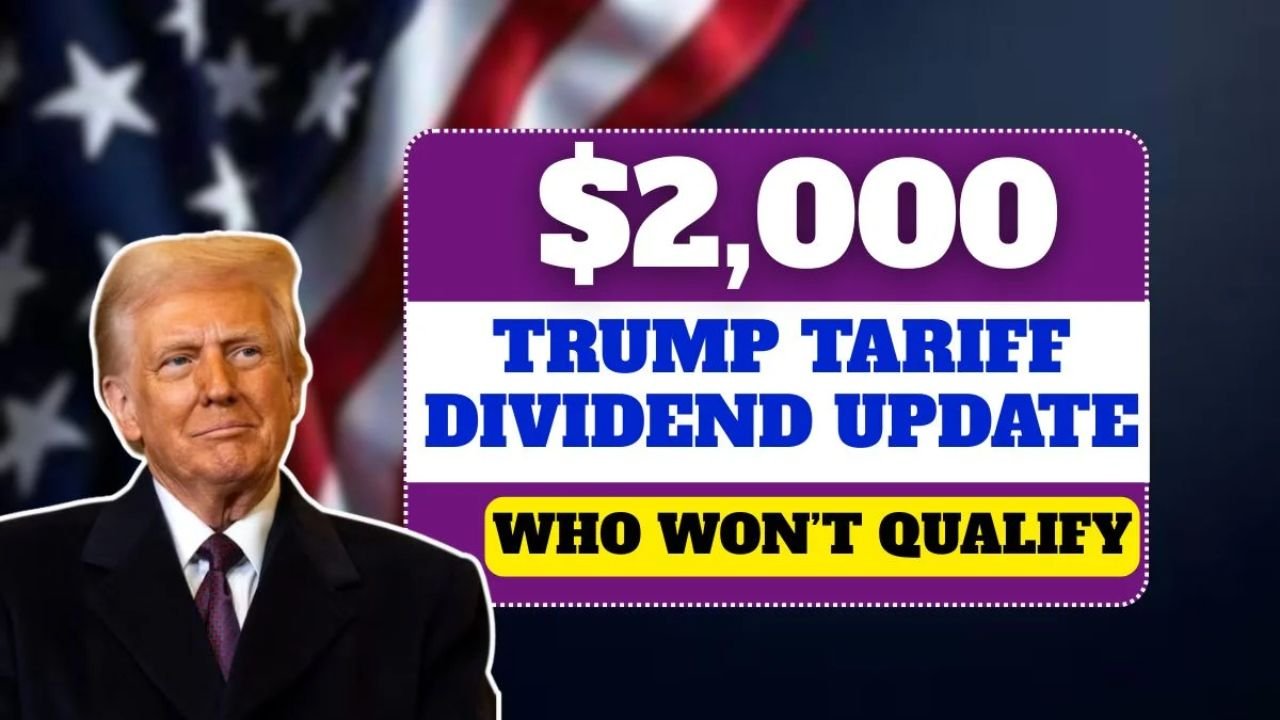
Discussions about financial relief are once again trending across the United States, and this time the focus is on former President Donald Trump’s newly proposed economic concept — the “Tariff Dividend.” This proposal has caught national attention because it suggests that eligible Americans could receive a $2,000 Stimulus Payment funded through tariff revenue. While the idea has generated excitement, a major question remains: Who will actually qualify, and more importantly, who will not? $2000 Stimulus Payment
This comprehensive breakdown explains the proposal, the logic behind it, and the groups that are likely to be excluded from receiving the $2,000 Stimulus Payment if the plan ever becomes reality.
What Is the Tariff Dividend Plan?
The Tariff Dividend Plan is based on a simple idea: the revenue collected from import tariffs should be redistributed directly to American citizens. These tariffs are taxes placed on foreign goods entering the United States, with the intention of strengthening domestic manufacturing and shrinking dependency on international suppliers.
Donald Trump has repeatedly emphasized that if he returns to office, the funds generated from tariff collections would be sent directly back to American households. According to him, this would function as a $2,000 Stimulus Payment, particularly designed to help those earning lower wages.
In a recent social media post, Trump wrote: “Low-income Americans will receive at least $2,000 per person as Tariff Dividend.”
This statement is the root of the nationwide buzz surrounding the proposed $2,000 Stimulus Payment.
Why Is the Plan Being Proposed?
Rising inflation, increasing unemployment, supply chain pressures, and a higher cost of living have made it harder for millions of Americans to meet their monthly expenses. From rent to groceries to medical costs, nearly everything has become more expensive.
Trump’s proposed $2,000 Stimulus Payment is positioned as both an economic relief measure and a political strategy. The goal is to ease financial pressure on families while transferring the benefits of trade revenue directly to everyday citizens instead of government departments or corporations.
Supporters claim the Tariff Dividend could:
- Support struggling families
- Encourage local spending
- Strengthen the “America First” economic model
- Reduce dependency on foreign markets
However, critics argue that the proposal may not be financially feasible, especially considering the revenue required to fund a nationwide $2,000 Stimulus Payment.
Who Would Qualify for the $2,000 Stimulus Payment?
Although Congress has not yet approved the plan, Trump’s team has hinted at general eligibility criteria. If implemented, the proposed $2,000 Stimulus Payment would likely prioritize:
✔ Low-income Americans
Individuals earning under $75,000 per year would be prime candidates for the payment.
✔ Middle-income families
Couples earning under $150,000 may also qualify.
✔ Tax filers with a valid Social Security number
This rule ensures that only verified citizens or legal residents would be included.
✔ People who filed taxes for the previous financial year
Up-to-date tax records would serve as the foundation for distributing the $2,000 Stimulus Payment.
These categories align with previous federal relief payment structures, signaling that the Tariff Dividend might mirror earlier stimulus criteria if it progresses.
Also Read – $2,000 Direct Deposit for US Citizens in November 2025 – Eligibility, Payment Dates, and IRS Instructions
Who Will Be Excluded from the $2,000 Stimulus Payment?
Not everyone will be eligible. Based on early information from Trump’s statements and policy analysts, several groups are expected to be excluded from the proposed $2,000 Stimulus Payment.
1. High-Income Earners
Individuals earning more than $100,000 and married couples earning more than $200,000 annually are unlikely to receive the $2,000 Stimulus Payment.
The plan aims to support financially vulnerable families, not wealthy individuals. Thus, higher-income earners will be filtered out, similar to how previous stimulus programs were structured.
2. Undocumented Immigrants & Non-Residents
Because the plan relies heavily on tax returns and Social Security number verification, undocumented immigrants and individuals without valid SSNs will not receive the $2,000 Stimulus Payment.
This category includes:
- Non-resident workers
- People living in the U.S. on temporary visas
- Immigrants without formal documentation
Their tax and citizenship records do not align with the structure of the proposal.
3. Businesses and Corporations
The $2,000 Stimulus Payment is strictly intended for individuals, not companies.
Corporations, LLCs, partnerships, and other business entities will not be eligible. The plan is marketed as a “People’s Dividend,” focusing entirely on American households.
4. People Who Do Not File Taxes
Since tax records form the basis for payment distribution, non-filers will automatically be excluded unless separate provisions are added.
Is the $2,000 Stimulus Payment Financially Realistic?
This is the most debated question.
The total amount of tariff revenue collected annually by the U.S. ranges from $80 billion to $100 billion. To distribute a $2,000 Stimulus Payment to every eligible adult, the government would need over $400 billion.
This massive gap raises concerns:
⚠ Economic experts warn:
- Tariff revenue alone cannot support such a large payment
- Higher tariffs may increase consumer prices
- Imports could decline, reducing revenue further
- Inflation may worsen if spending increases abruptly
To fund a nationwide $2,000 Stimulus Payment, Congress may need to approve additional budget allocations or introduce new taxation models.
Political Impact of the Proposal
Although the feasibility remains uncertain, the proposed $2,000 Stimulus Payment holds significant political weight. As the 2025 elections draw near, this proposal is seen as a major strategic move to win voter confidence.

The promise of direct payments appeals strongly to:
- Seniors
- Low-income workers
- Middle-class families
- Rural voting groups
However, opponents argue that the plan is unrealistic and could damage long-term economic stability.
Potential Economic Effects if Implemented
If successfully executed, a nationwide $2,000 Stimulus Payment could trigger multiple economic changes:
✔ Positive Effects
- Increased consumer spending
- Boost in retail and service sectors
- Temporary economic stimulation
- Job creation in local businesses
❌ Negative Effects
- Higher import prices due to tariffs
- Increased inflation
- Potential retaliation from trade partners
- Pressure on domestic manufacturers
The final outcome would depend heavily on how the policy is structured and implemented.
Public Reaction and Misinformation
Social media platforms are flooded with posts claiming that the IRS will deposit the $2,000 Stimulus Payment next month or that people should “register now” to receive the money.
These claims are false.
The IRS has not issued any official statement regarding this payment. Government agencies consistently warn citizens:
- Do not trust unofficial websites
- Avoid sharing personal information
- Check only .gov sources
- Ignore scam messages about stimulus registration
Until Congress approves the Tariff Dividend, the $2,000 Stimulus Payment remains a political idea — not a federal program.
What Happens Next?
For the $2,000 Stimulus Payment to become reality:
- Congress must review the proposal
- The Senate must approve it
- The President must finalize it
- IRS distribution systems must be prepared
Every step involves time, analysis, and economic evaluation. For now, the plan remains in its conceptual stage.

Conclusion
The Trump Tariff Dividend proposal has ignited widespread interest, largely due to the promise of a $2,000 Stimulus Payment. While it inspires hope among American families, eligibility limitations and financial feasibility challenges must be considered.
Those most likely to benefit:
- Low-income individuals
- Middle-income households
- Verified tax filers
Those who will be excluded:
- High-income earners
- Undocumented immigrants
- Non-tax filers
- Corporations
Until Congress approves it, the Tariff Dividend remains a political proposal rather than a confirmed benefit. Whether it becomes a historic financial relief program or remains a campaign promise will become clear in the coming months.
FAQs
Q1. What is the Trump Tariff Dividend Plan?
It proposes distributing a $2,000 Stimulus Payment funded through revenue collected from import tariffs.
Q2. Who will qualify for the $2,000 Stimulus Payment?
Low- to middle-income Americans with valid Social Security numbers and up-to-date tax filings.
Q3. Who will be excluded?
High-income earners, undocumented immigrants, non-residents, and businesses.
Some Important Link
| Download News APP | Click Here |
| WhatsApp Group | Click Here |
| Home Page | Click Here |