
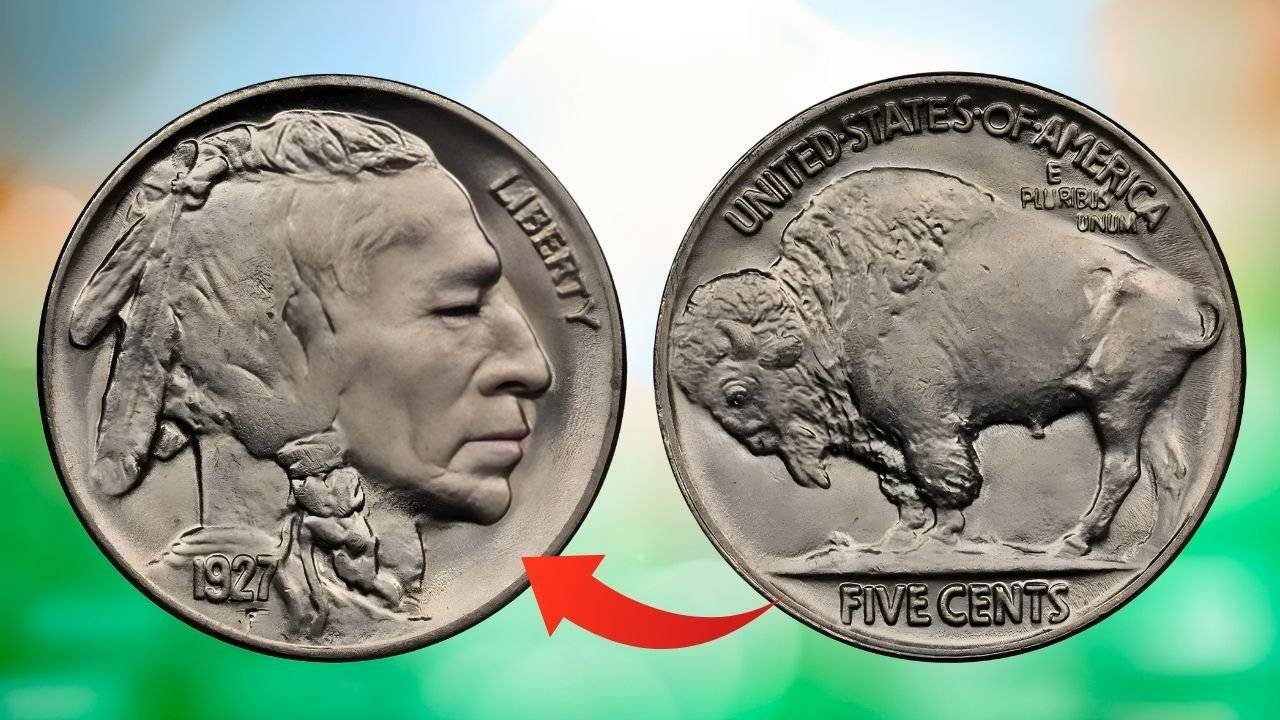
When it comes to classic American coins, few designs are as iconic and beloved as the Buffalo Nickel. Its rugged imagery, cultural symbolism, and deep historical roots have made it a favorite among collectors for over a century. And while there are many fascinating years in the Buffalo Nickel series, the 1927 Buffalo Nickel stands out as a semi-key date — not impossibly rare, but scarce enough to command strong collector demand, especially in higher grades.
If you’ve come across one of these coins in an inherited collection, at a flea market, or maybe even in loose change (yes, it still happens occasionally), you might be holding something worth far more than five cents.
Let’s take a closer look at the story behind the 1927 Buffalo Nickel, why it’s so collectible, and what determines its current value.
A Brief History of the Buffalo Nickel
The Buffalo Nickel, also known as the Indian Head Nickel, was minted from 1913 to 1938. Designed by sculptor James Earle Fraser, it features a stunning Native American profile on the obverse and a powerful American bison on the reverse — symbolizing the nation’s frontier spirit.
The coin’s design was both artistic and patriotic, but it wasn’t without challenges. The high-relief details led to rapid die wear and striking difficulties, resulting in coins with inconsistent quality — one of the reasons well-struck examples are so sought after today.
The 1927 Buffalo Nickel was produced in three U.S. Mint facilities:
- Philadelphia (no mintmark)
- Denver (D)
- San Francisco (S)
While the Philadelphia mint produced the highest number of coins that year, the 1927-S Buffalo Nickel is especially prized because of its lower mintage and scarcity in higher grades.
Why the 1927 Buffalo Nickel Is a Semi-Key Date
The term semi-key date refers to coins that are not extremely rare but are significantly tougher to find than common issues. The 1927 Buffalo Nickel fits this description perfectly.
While millions were minted across all facilities, the survival rate of well-preserved examples is relatively low. Time, circulation wear, and the coin’s weak strikes have reduced the number of sharp, collectible pieces available today.

Among all three mints, the 1927-S takes the spotlight as the most challenging to find in mint-state condition. Even though circulated pieces are relatively easy to locate, uncirculated ones are scarce and command much higher premiums.
What Is a 1927 Buffalo Nickel Worth?
Now for the question every collector loves: What’s it worth?
The value of a 1927 Buffalo Nickel depends on its condition, mintmark, and strike quality. As with most collectible coins, the better the preservation, the higher the price.
Here’s a general overview of values based on market data:
- Heavily circulated: $2 – $10
- Lightly circulated: $10 – $75
- Uncirculated (Mint State): $150 – $1,500+
- Gem-quality specimens: $2,000 and above
And among the mintmarks, values can vary dramatically:
| Mint | Mintmark | Mintage | Circulated Value | High-Grade Value |
|---|---|---|---|---|
| Philadelphia | None | High | $1–$10 | Up to $200+ |
| Denver | D | Mid | $7–$35 | $90–$1,000+ |
| San Francisco | S | Lowest | $5–$35 | $100–$1,500+ |
The 1927-S Buffalo Nickel, in particular, is notoriously difficult to find well-struck. Many examples appear soft or incomplete in detail, especially around the bison’s horn and the Native American’s hairline. Coins with bold, crisp detail can bring substantial premiums.
Also Read – 2026 RAM 3500 US Truck – The King of American Roads Returns with Power, Luxury, and Purpose
What Makes the 1927 Buffalo Nickel So Special
There are several reasons collectors continue to chase the 1927 Buffalo Nickel, even nearly 100 years after it was struck:
✅ Historical significance: It represents a period when American coinage embraced national identity and artistry.
✅ Semi-key scarcity: It’s rare enough to be valuable but still attainable for mid-level collectors.
✅ Design appeal: The intricate detailing and bold motifs make it visually striking.
✅ High collector demand: The Buffalo Nickel series has universal popularity across age groups.
✅ Strong investment potential: Well-preserved examples consistently appreciate in value.

Because the 1927 Buffalo Nickel falls right in the middle of the series, it’s an essential piece for anyone attempting a complete date-and-mint collection.
Factors That Influence Value
Like all collectible coins, several factors determine the price of a 1927 Buffalo Nickel.
1. Mintmark
The mintmark is found on the reverse side, beneath the words FIVE CENTS.
- No mintmark = Philadelphia (most common)
- D = Denver
- S = San Francisco (most desirable in higher grades)
2. Condition / Grade
Coins are graded on a scale from Poor (P-1) to Mint State (MS-70).
A coin’s sharpness, luster, and wear level significantly influence its value.
- A worn coin with a flat bison and faded date is worth only a few dollars.
- A crisp strike with clear features and minimal wear can bring hundreds.
3. Strike Quality
The Buffalo Nickel series is infamous for inconsistent striking. A coin with a full bison horn and detailed hairlines is far more valuable than one with a weak impression.
4. Date Legibility
Because the date was raised above the field of the coin, it often wore away quickly. If the date is faint or completely gone, the value drops dramatically.
5. Surface Damage
Scratches, corrosion, cleaning marks, and other alterations will decrease the coin’s worth. Ironically, leaving the coin uncleaned — even if slightly tarnished — is almost always better than trying to “restore” it.
How to Evaluate Your 1927 Buffalo Nickel
If you own a 1927 Buffalo Nickel, here’s how to examine it properly:
✅ Step 1: Flip the coin and locate the mintmark below “FIVE CENTS.”
✅ Step 2: Inspect the bison’s horn and tail for detail — the more visible, the better.
✅ Step 3: Check the obverse for sharpness in the Native American’s hair and feathers.
✅ Step 4: Look at the date. If it’s strong and fully visible, that’s a plus.
✅ Step 5: Avoid cleaning — professional grading is the best option for valuable examples.
If your coin appears in unusually good condition or has a clear mintmark (especially “S”), consider having it certified by grading companies like PCGS or NGC. Authentication ensures legitimacy and often increases resale value.
Why Collectors Love the 1927 Buffalo Nickel
Beyond the market price, the 1927 Buffalo Nickel carries emotional and historical appeal that makes it a cornerstone of American numismatics.
For collectors, it’s not just about value — it’s about owning a tangible piece of U.S. history. Each coin represents the early 20th century’s artistry, craftsmanship, and evolving identity.
The rugged beauty of the Native American portrait and the strength of the bison embody the spirit of the nation during a transformative era. This deep symbolism explains why demand for Buffalo Nickels, particularly semi-key dates like the 1927 issue, remains so strong.
Should You Buy or Hold the 1927 Buffalo Nickel?
If you’re a collector or investor, the 1927 Buffalo Nickel is a smart choice. It’s attainable yet scarce enough to appreciate steadily over time.
- For beginners: Philadelphia mint versions are affordable and easy to find.
- For seasoned collectors: The 1927-D and especially the 1927-S provide more challenge and long-term value.
The market for Buffalo Nickels remains active, and demand for mid-grade to high-grade coins is particularly strong. While this coin might not make you rich overnight, it offers consistent appreciation, historical charm, and the thrill of collecting something truly American.
Final Thoughts
The 1927 Buffalo Nickel perfectly bridges the gap between common and rare — a coin that’s accessible yet full of history, artistry, and collectible value. It stands as a semi-key date that every Buffalo Nickel collector eventually seeks out.
Whether you’re new to numismatics or already building a complete set, this coin deserves a place in your collection. It’s a reminder of a time when U.S. coinage blended art and history seamlessly — and it continues to captivate collectors nearly a century later.
So, before you dismiss that old nickel rattling around in a drawer or box, take another look. That 1927 Buffalo Nickel might just be a small treasure from America’s golden age of coin design — and it’s definitely worth holding onto. 🦬
Quick FAQs About the 1927 Buffalo Nickel
Q1: Why is the 1927 Buffalo Nickel called a semi-key date?
Because it’s tougher to find than common years, especially in high grades, but not as rare as top key dates like 1913-S Type 2 or 1937-D “Three-Legged.”
Q2: Where can I find the mintmark?
Check the reverse, directly beneath the words FIVE CENTS.
Q3: Are worn 1927 Buffalo Nickels still valuable?
Yes — even well-worn pieces carry collectible value, often ranging from $2 to $10 depending on condition.
Q4: Should I clean my Buffalo Nickel?
Never clean old coins — it destroys their surface and reduces value.
Q5: Can a 1927 Buffalo Nickel still be found in circulation?
It’s extremely rare, but occasionally one surfaces from estate finds or forgotten jars.
Some Important Link
| Download News APP | Click Here |
| WhatsApp Group | Click Here |
| Home Page | Click Here |