
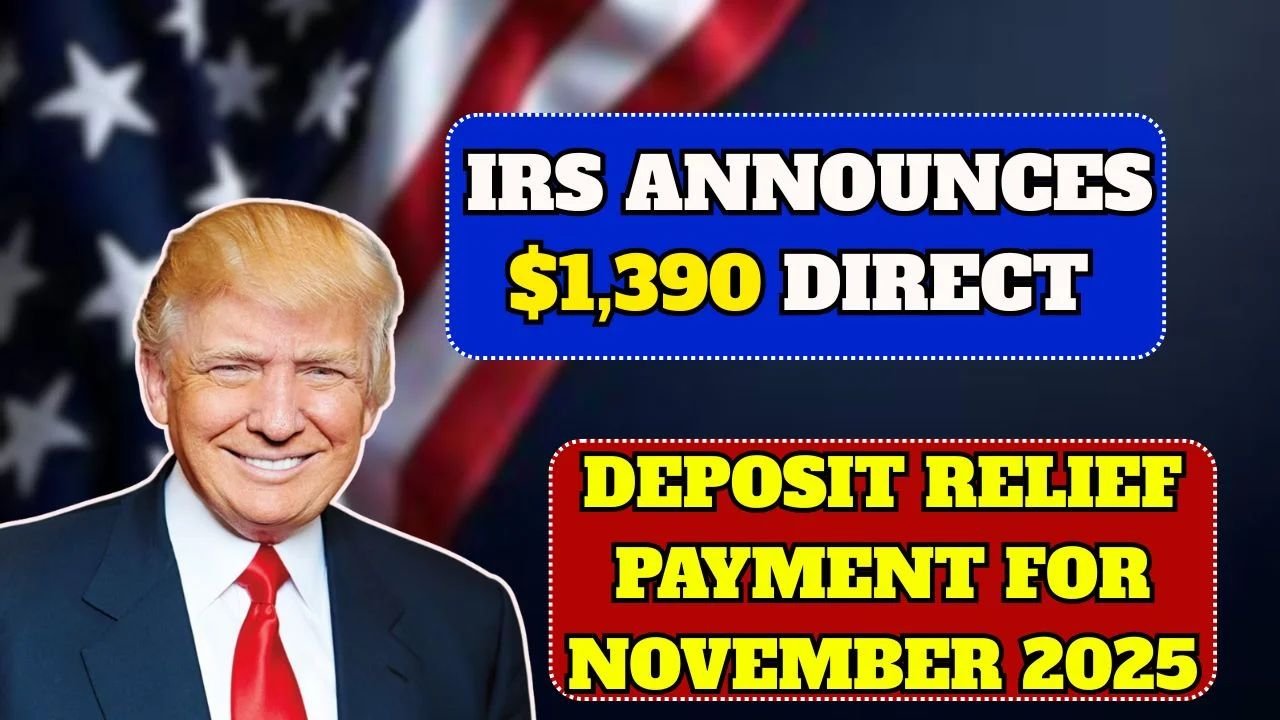
The Internal Revenue Service (IRS) has officially confirmed a new financial relief initiative that is expected to support millions of Americans during a time of persistent inflation and economic uncertainty. The agency has announced a $1,390 Direct Deposit payment scheduled for distribution in November 2025, offering a much-needed financial lifeline to households struggling with rising prices, rent hikes, and increased everyday expenses.
This $1,390 Direct Deposit payment is part of a targeted relief effort to ease economic pressures and support national consumer spending, which plays a significant role in stabilizing the broader U.S. economy. As families continue to feel the lingering effects of post-pandemic disruptions and ongoing inflation, this IRS measure aims to provide timely assistance exactly when it is needed most.
In this detailed guide, we will cover everything you need to know about the $1,390 Direct Deposit payment, including its purpose, eligibility rules, payment dates, distribution process, and how it impacts the American economy.
Understanding the IRS $1,390 Direct Deposit Payment
The IRS manages the federal government’s tax system as well as several financial assistance programs designed to help Americans during economic downturns. While stimulus checks are typically associated with major national emergencies, the $1,390 Direct Deposit payment is a targeted relief measure intended to support individuals who continue to suffer financial challenges.
Unlike previous payment programs, this $1,390 Direct Deposit payment is not a broad stimulus package but a relief payment extended to specific groups who qualify. The IRS has confirmed that eligible citizens will have the payment deposited directly into their bank accounts beginning in November 2025.
This effort is aligned with the government’s mission to reduce the financial strain caused by inflation, high living costs, and increasing household expenses.
Why This Relief Payment Matters
Prices of essential goods—including groceries, fuel, and utilities—continue to rise, making it more difficult for families to manage their monthly budgets. For many, even a modest financial boost can help cover essentials such as:
- Rent or mortgage payments
- Groceries and household items
- Prescription medications
- Utility bills
- Transportation costs
- Emergency expenses
The $1,390 Direct Deposit payment provides timely support to help families stay afloat and maintain stability during economic turbulence.
Additionally, this relief payment boosts consumer spending—one of the most influential drivers of the U.S. economy. Increased spending helps support businesses, strengthens local economies, and promotes job stability.
Eligibility for the $1,390 Direct Deposit Payment
The IRS has set specific guidelines for those who qualify for the $1,390 Direct Deposit payment. Eligibility criteria include:
✔ A valid Social Security Number (SSN)
Applicants must have an active and valid SSN to receive the payment.
✔ Income within IRS-approved limits
Lower-income individuals and households will receive priority. Typically, those who fall under middle- or low-income brackets qualify automatically.
✔ Filed tax returns
Citizens who have filed their most recent federal tax returns will be automatically assessed for eligibility.
✔ Special groups who qualify automatically
These include:
- Social Security retirement beneficiaries
- SSI (Supplemental Security Income) recipients
- SSDI (Social Security Disability Insurance) recipients
- Low-income workers
- Veterans who meet income and identification requirements
Individuals who meet these criteria will receive the $1,390 Direct Deposit payment without needing to apply.
Also Read – $1,000 Stimulus Payment for Everyone – November 2025 Full Payment Schedule
How the Payment Will Be Distributed
The IRS has stated that the $1,390 Direct Deposit payment will be processed electronically for all eligible recipients who have direct deposit information on file. This ensures a faster, more secure, and more efficient distribution process.
Direct Deposit Timeline
- Payments begin in the first two weeks of November 2025.
- Those who have recently updated their direct deposit details may experience slight delays.
Paper Checks and Prepaid Cards
Those without direct deposit information will receive:

- Paper checks, or
- Prepaid debit cards
These will be issued a few days after the initial direct deposit phase.
The IRS plans to roll out payments in phases to prevent system overload and ensure accuracy.
Economic Impact of the $1,390 Direct Deposit Payment
Economists expect the $1,390 Direct Deposit payment to stimulate consumer spending in sectors such as:
- Retail
- Food and grocery
- Healthcare
- Housing and utilities
- Transportation
By improving household spending capacity, this relief measure helps stabilize inflation-sensitive sectors and strengthens the economy’s overall financial health.
Many analysts believe that this payment is a strategic move to support financial security for vulnerable populations while contributing to broader economic recovery.
How This Payment Helps Seniors and Low-Income Families
Older adults and Social Security beneficiaries often struggle to keep up with rising costs because their fixed incomes do not increase at the same pace as inflation. The $1,390 Direct Deposit payment is expected to relieve pressures related to:
- Medication costs
- Medical appointments
- Utility bills
- Housing costs
- Daily living expenses
Low-income families will also benefit significantly, especially those managing rent, childcare expenses, or medical bills.
IRS Guidelines and Important Warnings
To ensure smooth processing of the $1,390 Direct Deposit payment, the IRS encourages citizens to:
✔ Keep their tax returns updated
Filing taxes on time ensures immediate eligibility verification.

✔ Beware of scams
The IRS never:
- Calls to request personal details
- Sends text messages requesting bank information
- Asks for fees to release payments
Citizens should only rely on information from IRS.gov.
Is the Payment Taxable?
No.
The IRS has confirmed that the $1,390 Direct Deposit payment is non-taxable and will not reduce future tax refunds or Social Security benefits.
However, recipients should keep a record of the payment for personal financial documentation or future audits.
What to Do If You Don’t Receive the Payment
If you do not receive the $1,390 Direct Deposit payment by the end of November 2025:
- Visit IRS.gov
- Click on “Check My Payment Status”
- Enter SSN, date of birth, and address
- View payment status, delays, or reissue dates
The IRS will resend payments returned due to invalid or outdated bank information.
Public Reaction to the Payment
The announcement of the $1,390 Direct Deposit payment has generated overwhelmingly positive reactions. Many Americans have expressed relief and gratitude, saying the payment will make a meaningful difference in their lives during a difficult financial period.
On social media, families shared that the payment will help them with rent, groceries, holidays, and winter expenses.
Government Outlook Going Forward
The federal government plans to continue monitoring the economy closely and may introduce additional relief programs depending on economic performance in 2026. Possible future initiatives include:

- Additional tax credits
- Expanded Social Security support
- Housing relief measures
- Healthcare assistance programs
Conclusion
The $1,390 Direct Deposit payment announced by the IRS is one of the most impactful relief measures of 2025. At a time when inflation and rising living costs continue to burden American families, this payment provides not only financial help but also hope and reassurance.
This initiative underscores the government’s commitment to supporting citizens, strengthening the national economy, and prioritizing long-term stability.
Eligible individuals should verify their bank details and tax filing status to ensure they receive the payment on time.
FAQs
Q1. Who is eligible for the $1,390 IRS relief payment?
Individuals with valid SSNs, low-income earners, seniors, and Social Security beneficiaries qualify.
Q2. When will payments be deposited?
Direct deposits begin in early November 2025, followed by mailed checks and prepaid cards.
Q3. Is the payment taxable?
No, the $1,390 Direct Deposit payment is completely non-taxable at the federal level.
Some Important Link
| Download News APP | Click Here |
| WhatsApp Group | Click Here |
| Home Page | Click Here |